The Women of Woolwich – Let’s hear it for the women…

Ingrid Loyau-Kennett remonstrating with one of the killers

Upon reading the incredible stories of women who shielded the soldier’s body and who engaged with the barbaric individuals who enacted yesterday’s atrocity, I can’t help but draw parallels with the brave and valiant women who stayed to watch Jesus at the crucifixion, refusing to let him die without friends and family close by, and those who were also the first to rush to the burial scene on Easter morning.

What incredible displays of courage shown in both instances. Women, undeterred by bloody scenes of absolute horror. Women, refusing to walk away but standing their ground to show defiance against evil and solidarity with the subject of unfathomable violence.

The Cub Scout leader, who calmly remonstrated with the cold blooded murderer on the streets of Woolwich, unflinchingly drawing near to the crazed men brandishing bloodied weapons, is a wonderful reflection of utter selflessness and lack of fear. The woman, a 48 yr old mother from Cornwall, thought only of distracting the perpetrators from inflicting further atrocities and protecting others. She showed no concern for her own safety, thinking primarily of innocent bystanders and children who would be leaving school.

What an amazing, totally inspiring display of calm courage. What absolute evidence of humanity at its finest, unwilling to let evil triumph unquestioned. Without any formal training or suitable qualifications, this one woman succeeded in redeeming hope in a hopeless situation. She epitomises fearlessness and true strength, without having any chance of reaching for a weapon in self defence.

And what about the woman pictured seated in the road beside the fallen soldier, praying over him? She thought nothing of entering this horrific crime scene to honour the dead soldier and pray over his mutilated body. In place of murderous violations of a human being, she brought peace and showed the ultimate display of compassion and care. She could not revive the man; it was already too late. But she did that which she could: namely publically mourn over loss of life, showing her respect and thus mirroring the love of a mother – an unrelenting, exuberant, undeterred love. This one action reflected the unconditional love of our Father God.

In response to this abominable tragedy, let’s hear it for the women! The women such as these in Woolwich, who, while going about their daily lives, chose to defy evil and stand up for the helpless. Countless other women across the globe likewise refuse to stand back and be silent, or run off in dismay. Think of the teachers who comforted and shielded the defenceless, frightened children in their care at the Plaza Towers Elementary School in Moore, Oklahoma, as a raging tornado brought down the school around them. They too acted in loco parentis where parents could not be beside their children.

Such are the women who refuse to allow their culture, their community or their nation be destroyed by acts of terror or disaster. Such are the women who fight for change or stand up to bullies. Even sadistic bullies carrying multiple weapons, with hands dripping blood.

This is one instance where medals should surely be awarded, even though they are not sought. On that fateful street in Woolwich those women were not seeking acclaim or fame. They gave no ostentatious speeches and didn’t attempt to seek reward for their actions. No, rather they demonstrated pure, unadulterated courage. What an inspiration in such dire and highly dangerous circumstances.

Let’s hear it for the women: fearless, compassionate, pursuers of peace. Oh, how we should commend their incredible compassion and feats of bravery.

Managing the Media in Your Family

Image

Photo Credit: dazex, Creative Commons

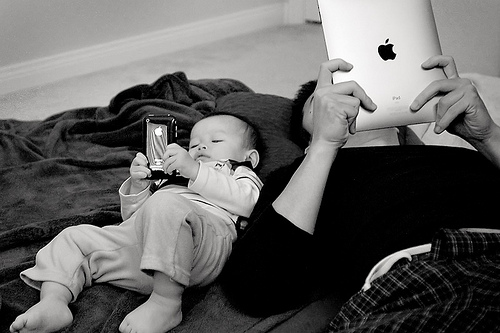
It’s a recurring theme in our family life. The tapping of keys at the keyboard, the alluring glow of a DSi, mobile phone or iPod Touch, eyes glazed over oblivious to the conversation nearby.

Sound familiar? In just one generation we’ve gone from radio and four channels on TV to a whole Pandora’s box of continual media, demanding our attention or distracting us from other pursuits.

If you’ve been struggling to maintain some kind of balance of media consumption in your home, or have become frustrated over attempts to restrict what your children view, you are not alone. But where do you even start?

While most parents don’t think twice about exerting some influence over their child’s appearance (at least pre-teen), meals or behaviour, many are bewildered when it comes to setting limits on media.

There is no easy answer; each family needs to navigate through this issue depending on the age and maturity of their kids, but there are some practical ways to curb the time and influence that the media exerts over our children, as well as us.

Be aware

Firstly, be aware of how media is consumed both in and out of your home. Stay informed about  your child’s internet use and avoid TVs, computers and consoles in bedrooms (even amidst complaints that everyone has these things in their room). Make yourself familiar with the gadgets they own and what they are used for.

Set limits

When our [then] seven year old son received a new DSi for his birthday, we had already agreed that it should not be used before school, nor till after homework has been completed. Agree the limits in advance with your child, otherwise you may well find your offspring permanently attached to their gadget every waking hour.

Discuss

Discuss the concerns you have and the reasons for them. Encourage open conversation about what your child has seen or heard, trying as best you can to not appear too alarmed by what they may share with you! Discuss issues of cyberbullying and personal safety. Have a look at websites such as thinkuknow to get better informed.

Rules

There’s nothing wrong with establishing a few rules when it comes to managing the media in your house; like only having censored versions of CDs or mp3 tracks, rather than the expletive ridden originals from artists such as Tinie Tempah or Plan B. Likewise feel free to  insist on adhering closely to the age restrictions on DVDs and video games.

One rule we’ve adopted is ‘“No phones’ at the meal table. Texting is only allowed once others have left the table. This allows for uninterrupted conversation as well as the learning of some manners. (And, yes, this rule does get broken now and again, but at least phones aren’t a regular mealtime feature.)

Use technology to help you

Find out about and use parental software controls, passwords on computers and TV (Google it!) Explain to your child that you will be monitoring their TV and internet use and that certain sites are off limits (I highly recommend Open DNS for a free internet filtering service that protects every computer in the house. There are variable options and restrictions. Check it out here.)

Be a good role model

Look at your own media habits. Are you always glaring at your laptop or hooked to your smartphone? Chances are that your child will copy you. Show restraint, for example, by not spending hours on the internet every night and try restricting social media to certain times of day.

You’ve got the power

Lastly, do not forget that you are the parent with the power to unplug or remove a gadget from your child, particularly if signs of addiction are evident. (Refusing to eat or get dressed is a sure-fire indication, but there are others.)

The benefits

In setting up some limits and restrictions, there will be more opportunities available to take back family time together. Often we’ve lost the art of relaxing without a screen or gadget; but this can be good for health, well being and relationships. Why not play a board game or go for a walk together? Or be more creative by painting, learning an instrument or a new hobby.

When the possibility of further electronic items is removed, kids generally find they actually enjoy themselves (after their initial moan). In our family we’ve noticed that we become more thoughtful of one another, a sense of humour restored and brighter faces return from time spent outdoors.  We’re still far from having everything sussed in this area, but we’re trying to have some measure of control over our media habits, rather than allow technology and the media to control us.

This article was first published in 2012 by Lookingatlife, a former webzine of Care for the Family. Written by Annie Carter

A Cluttered Mind…

Image

As I looked back on the day, I realised that I had barely had the chance to gather my thoughts and was shocked at how unproductive I had been. It wasn’t a question of time – I certainly had moments throughout the day where I could have focussed on writing. But that was the problem – I couldn’t focus. Demands, distractions and concerns consumed me, and I realised my mind was out of sorts – cluttered.  I wouldn’t be able to concentrate on anything else. It became obvious that:

A cluttered mind…

  • stifles creativity
  • confuses thought
  • thwarts plans
  • delays action
  • minimises success

A cluttered mind may also overwhelm or depress you.

How to de-clutter and refresh your mind?

  • unplug technology
  • walk among nature
  • listen carefully
  • breathe in beauty

Music may also provide a positive backdrop to encourage clarity.

Once in a while we could all benefit from calm and walking away from the chaos.

A quote from the Bible: “But you should keep a clear mind in every situation.” (2 Timothy 4:5, New Living Translation)

Spiritual Climate /FaithWalk

Image

I’m sitting on the balcony wearing a sleeveless summery top and denim shorts. The hills, palm trees and sailing boats contribute to the delightful scenery  from our holiday apartment. I watch people as they stroll along the promenade beside the beach and it’s amazing to observe who are the tourists and who are the locals.

It’s April in Majorca – a stark change from the wet and cold conditions still dominating the British Isles. It’s warm and sunny, but only the start of spring on this holiday resort.

There’s a woman crossing the road wearing a coat and winter scarf. It’s inching towards 20 degrees and I chuckle to myself. She’s obviously Spanish; she won’t be ditching the coat till it’s a couple of degrees warmer. The Brits are easy to spot; they’re wearing very little. Starved of sunshine and warmth after a brutally cold, long winter, they’re quick to strip off the layers and soak in the sunshine. Having left behind temps barely hitting 5 degrees for so long, 20 degrees feels blissfully hot.

So why the difference in attire? Most will recognise immediately that it’s all a question of acclimatisation. The Spanish are used to the Majorcan sun – it’s nothing special or unusual to them. They don’t feel a desperate need to catch a bit of a tan; they know they’ll be plenty more sun on its way. The thermometer will likely reach 35 or 40 in a few weeks and, for now, 20 is just pleasant, if not still slightly cool to them. Admittedly, even we have felt rather cold indoors in the evenings since we arrived.

This got me thinking about my faith – whether I’ve grown accustomed to the spiritual climate around me, such that I’m happy to walk around burdened by layers of stuff, rather than appreciate the newness of each day’s sunshine. Could I possibly be looking for opportunities to strip off some unnecessary layers such as legalism or spiritual striving, and simply enjoy basking in the presence of the Son? Or will I continue to take His presence for granted some days, knowing that He always promises to walk beside me?

Perhaps I’m so settled in my spiritual climate that I don’t even notice that things have changed? Has my love for God grown cold or predictable? Maybe I need to shed my coat of mediocrity and my scarf of smug satisfaction and revel in the warm glow of Christ’s grace once again, stripped of the cumbersome layers of obligations and concerns. I’m often so busy trying to achieve in my Christian walk that I neglect the simplicity of enjoying Christ and relaxing in his presence.

Just as the Spanish might take the sun for granted, it’s so easy to start taking the Son’s presence for granted. Whilst I hope that’s not true for me, I’m aware that I often don’t really make the most of  revelling and delighting in him daily. I’ll never know when I may next be led to walk through a valley or dark shadow. Life has shown me those dark days will come.

I should brim over with the goodness and spiritual warmth he pours out on me today. What a wonder to experience his light and tangible warmth! God is good.

Boston, Prayer and Tragedies / FaithWalk Response

Creative Commons: 4ThGlryOfGod

I wonder how many of us were praying for Boston before the Marathon or the explosions.

It’s not my intention to be facetious; I’m just considering some issues swirling around my head right now. It seems close to home, yet still far away. The hashtag #prayforBoston sprang up quickly across Twitter, as people of faith responded in the best way they could. When you’re too far away to give blood or offer help at the scene, prayer is the one thing unrestricted by distance.

As events unfolded on Monday, I began thinking about how much of our praying is reactionary, a knee jerk response to crises & collisions in our lives and spaces or the lives of others.

That’s not to say that we shouldn’t pray after tragedies & events in the news. We should. We should always seek out opportunities to pray for those going through disaster or pain.

But maybe there’s something we can all learn from that prayer we are so familiar with – the Lord’s prayer, where Jesus instructs us to pray – Deliver us from evil… Your kingdom come.

It should be a daily practice in our spiritual walk to pray in the way Christ demonstrated to us.

Maybe we should return to the roots of our faith and revive corporate prayer… Deliver us! It’s not just an Anglican, liturgical thing; Jesus wants all believers to pray in this way.

Are we willing to get on our knees and pray for our towns and cities to be shielded from devastating violence?

I’m aware of the tendency in my own life to coast along in my prayer activity when everything’s going just nicely. When an urgent situation or major dilemma arises, I immediately think about praying fervently. It’s my natural response.

I need God when I’m in trouble. There is no shame in that. Even the psalmist illustrates how we can walk through the valley of the shadow of death. I am weak and know I need God in my moments of desperation, in times of dismay.

But what about praying with passion when nothing special is going on, when mainly good stuff is occurring in life and in my vicinity?

The Boston bombings have challenged me once again to pray urgently and wholeheartedly for my family, friends, city and country before they run into disarray. Before tragedy strikes. Before unspeakable horrors occur. I need to be reminded of this regularly.

In our towns, our cities and on our doorsteps live and lurk the desperate, the deluded and the dangerous people of our broken world.

We don’t know what thoughts consume or trouble those whom we walk past or interact with as we go about our daily life. The sad news of the distressed pregnant mother who killed herself and three children in Lowestoft struck a nerve as they lived in a street that I have walked along; it’s just a stone’s throw from a beautiful beach and I have relatives in that locality.

We shouldn’t live in paranoia, mistrust and constant fear. But we can pray – as Jesus taught us.

Your Kingdom come.

God’s kingdom come!  In our homes, on the streets, in our places of work and leisure.

Our praying will not necessarily avert destruction wreaked by those whose hearts are closed to Him. Disaster cannot be eliminated this side of eternity. But we can rest assured that we are fulfilling Christ’s commands by praying according to his will. We should not ever give up praying: “Your Kingdom come”. For where His kingdom is manifest – through love, compassion and grace – lives are transformed and nations are saved.

Let’s make it a constant thing in our Christian walk – to cling daily to the power of prayer. And at this time, as we pray for those affected by Boston’s horrific tragedy, let’s also offer prayers for the people and places near to us.

Also, be cheered by stories such as these to lift your spirits…

Amid shock at Marathon, a rush to help strangers http://b.globe.com/13ce8Xe

Museums offer free admission in response to marathon bombings http://b.globe.com/YtdgKF

Poem for Boston: Marathon Monday


Expectancy in the crowds
Runners push themselves to the limit
Breathless and bubbling with pride
Destined for glory
Racing towards the finish line

Eyes focus on the final stretch
A race against time
Passion compels to keep going
Even under the strain

Oh the pleasure of a momentous day! When –

Loud blasts dismay, flames invade
The unthinkable shatters
Dreams strewn in the gutter
Anticipation smashed by shock
Coursing through veins like a smack in the face
Into a heart of absolute terror

No cheers or jubilation
Explosions steal the day
Fear overtakes and crying commences
Chaos tears through, taking centre stage

Blood on the streets
Carnage surrounds
Fear etched on their faces
Destruction blasts the joy away
People panic and fall on this

Horror filled Marathon Monday

It was never meant to be this way
Why did this have to happen today?
Goals and dreams smashed in pieces
Despair and dread assume their places

Anything can spoil a day
But they never thought it would end this way

Pain inflicted on purpose
A hellish scene to behold
Utter disbelief, complete shock
How can someone choose to act this way?
A moment of madness brings
Devastation

On this April Marathon Monday

But there is hope in humanity as
Arms reach out and legs run into
The commotion
Caring hands help heal the wounded
Swift to repair, to hold, to revive
Nothing can impede the human spirit
Forged by God himself, made in His image

Love will overcome
And Boston will rise
To live another day
But may never be quite the same

Oh the heartache of a single day

May freedom ring out once more on Patriots’ Day

Bastille: Pompeii/ FaithWalk Comment

The song playing on the radio caught my attention. I’m a sucker for a catchy song, but this time I thought I’d inadvertently tuned to a Christian channel rather than Radio 1 and had to check the dial. My foot started tapping along in the car as I heard:

“We were caught up and lost in all of our vices…”

“Oh where do we begin, the rubble o’ our sins?”

I only heard the latter part of the song and missed the artist details, but when I got home I searched over Radio 1’s playlist and discovered the song named ‘Pompeii’. It made sense when I watched the video – the inevitability of the destruction of the ancient city, how not one individual could escape the impending doom.

The spiritual analogies are rife, and I keep listening to this song which dominates the airways as it resonates with our current culture. The video is a vivid display of the inevitability of the destructive forces of our sin. But the artist leaves us with no solution. We’re simply destined to succumb to the darkness in our eyes and souls.

But there is a solution. And it’s found in the person of Christ who’s made restitution for the darkness that seeps into our hearts and tries to take over. How amazing to know that we are not lost and we don’t have to submit to the overwhelming depravity that comes to us naturally. In Christ anyone can become a new creation and experience a transformed life. We can’t get rid of the darkness on our own, but when we let God step into our lives, He can wash us clean.

This may not be the intended message that the artist wanted to convey, but my spirit almost can’t help shouting out the solution to the burden of a dark heart that Christ wants to fill with his light. I’ve experienced that light and it’s oh so freeing. Next time you hear the song, think what about what it speaks to you.

Write the Future – How you might play a crucial role in another’s life story


In today’s world we are increasingly urged to think positively, aim high and set ambitious goals for ourselves. The self improvement business has seen unprecedented growth in the last thirty years, with demand for books, seminars and speakers setting off a whole niche industry worth $11bn that didn’t even exist much before the 1930s. Countless success stories of people climbing the ladder or turning their life around serve to remind us of the strength of the human spirit and self determination. High profile figures such as Oprah Winfrey or Bear Grylls inspire us to believe that anything is possible.  The old adage ‘You can do anything if you put your mind to it’ is a popular motto.

Although there’s much to be said for the value of being the best you can be and trying to achieve one’s goals, it would be easy to adopt a self centred focus – seeking only to serve your own best interests at all costs. In the quest to make it in the world and be the best you can be, it would seem that there’s a tendency to forget that we do not live in a vacuum, where what we do or say only affects us, but rather that our destinies are intertwined with the people all around us – our family, our neighbours, our friends and co-workers.

The sentimental classical movie It’s a Wonderful Life shows us how just one life can make a difference to many others.  If George Bailey hadn’t been born, he would not have been there to save his younger brother’s life or to prevent a young woman’s demise. In a similar vein, the more recent movie The Butterfly Effect starring Ashton Kutcher, explores the issues of abuse and positive and negative interactions between people and how those actions can trigger a chain of events for good or evil. Although the premise of the movie is based on one man’s disturbed childhood and consequent psychological disturbances, the theme that runs through the film is a desperate attempt to consider whether we can effect major change in others’ lives depending on our own choices and actions. The dilemma for the main character exists in his stark inability to do all the right things to help others be successful and avoid destructive forces in their lives. The viewers soon realise the impossibility of one man’s mission to make everything perfect. Ultimately, he reaches the conclusion that is polar opposite to It’s a Wonderful Life – namely that his friends and family would all be better off if he had never been born.

In one sense, The Butterfly Effect is rather negative or nihilistic. There is no hope other than his having not been born. An alternative reality where the negative issues are worked through, resolved and where everything turns out okay is not offered. For the most part we realise that ‘happy ever after’ endings are mere fantasy for most people, let alone groups of people.

The flawed part of this story is in the glossing over of the fact that other people also determine how their life turns out, according to their own choices. We’re led to believe that the lead role has the power to save or destroy others’ futures according to his actions, yet it’s clear that there are a vast number of factors which shape a person’s life and affect their choices or the consequences of what happens depending on whom they live and interact with. It wouldn’t be drama without these stark twists of fate with their extreme chain reactions; we’re meant to feel disturbed and left wondering about the influence of our own decisions and the effects of our relationships with others.

This is a good thing. It’s good to be reminded that our lives are inextricably linked to other people’s – that we may not only be the master of our own destinies but also other people’s. At the same time, the movie depicts the fallen, imperfect world that we inhabit; we cannot be its saviour and make everything just right for those around us. One human is simply not that powerful, to erase all pains and troubles from others’ lives. Nor are we able to go back in time and make different choices. We all make mistakes or poor choices and have to endure some of those consequences.

Faith in Christ will also not automatically wipe away the hurtful and alarming things we’ve encountered this side of eternity. Whether you are a Christian or not, we all have to deal with the cards dealt us in life and face up to the circumstances surrounding our childhoods. But I am convinced by the message of hope and redemption in Christianity that is only lightly hinted at in the movie I watched. A life redeemed by Christ’s power is able to transform the stories of our lives, but we need to be open to the significance that our words and actions bring. Despite the pointlessness in believing we can effect change for anything and everyone (we certainly can’t) – we do have some measure of influence over some circumstances and situations, especially as adults. Although we’re unable to control the actions of others, we may well play a crucial role in steering another’s life in a positive direction.

The movie did then remind me that words and actions can be significant and that, to a certain degree, we can be effectors of change and influence. Ordinary individuals can wield power that is far reaching or that triggers a turn of events – either in a positive or negative way. I know that I, for one, long to use my words, my relationships, my actions to bring about positive influences  – and that it’s only in considering the circumstances of others more that I come to realize that life is not all about ‘me’.  If I know you, my life is linked to yours. The realisation of that truth is mind boggling.

For those who follow Christ, we have the reassurance that we can commit our daily lives to Him and be sure of his guiding hand over our life. We need not stress over the ‘right’ or ‘wrong’ choices; we can only live as best we can with the knowledge that a life entrusted to God is secure no matter what we go through.  None of us knows what the future holds and we cannot control other people’s actions or reactions. But we can know the One who holds the future and who promises to walk beside us every step of the way.

We can also live more aware of the role that we play in the futures of those around us. We are in no way responsible for everything – (What a burden that would be!) – but we can play a part in writing the futures of others. Part of our humanity is irrevocably tied into the common themes and experiences we share with others. One day we’ll look back on the story of our lives to see what we wrote and what roles the different characters in our story played. In many ways, how we behave and interact today will be featured in the future stories of those connected to us. And I find that quite incredible to grasp.

Beyond Winter (a poem)

Enduring, pervading, persistent, prolonged

Yet not permanent
Prevailing, encompassing, surrounding,
Sustained
Yet not forever
Merely a season
Passing, changing, quickening
Till he brings forth
Spring,
Though she may tarry
Let her come
Like a bride sweeping to her beloved
Casting all else aside
Determined, focussed, assured
Of his love

Not looking back to the
Bare, stark darkness of
Winter, now
Passing, depleted, defeated
Suppressed
Giving way to warmth
New growth, new life
Vibrant colours of his
Successor
Proud in her coming
Majestic, appealing, awe-inspiring
Yet gentle, meek
Awaited, now welcome
Closing the door, once more to
Winter

Be the Inspiration – How using your gifts can be a life changer for someone else/ FaithWalk

Image

Photo Credit: Dafydd359, Creative Commons

The old classical guitar positioned in the corner of the room wasn’t particularly alluring or noteworthy. It was concealed within a cheap, tan coloured case gathering dust. But it beckoned me.

My older sister had long since left for college, having had some beginners’ classes, but she’d decided not to pursue the instrument any further. I knew she wouldn’t mind if I claimed the second-hand guitar as my own. Excitedly I opened the case and placed the strap across my shoulder. It felt a little cumbersome, yet simultaneously magical; the varnished wood and nylon strings seemed well crafted and aesthetically pleasing. I plucked the strings to discover it was greatly out of tune. I would need to get my friend to tune it; perhaps she could show me a thing or two.

I was in the middle of my ‘A’ levels when I decided to learn the guitar and figured that if I practised during my times of relaxation, instead of watching Australian soaps, that it might just be time well spent. I was right.

Within a year and a half I was writing my own songs, leading worship at small groups and C.U at university and playing with other musicians. By that time I’d acquired my own Yamaha acoustic guitar and a set of music books. When I met my future husband at university, one of the things that helped draw us together was our common interest in music and guitar. Within months we were asked to sing and play at a friend’s wedding.

A year or so after that I was playing alongside German friends during my year abroad. The song I composed there in my room, inspired by a photograph on my pin board, and sent to my fiancé on a TDK cassette tape (remember those days?) was sung by me and my husband on our wedding day. ‘First Love’ wowed the congregation, as the song had not been scheduled into the order of service. (I had been worried that I might be too nervous and back out on the day).

Fast forward a couple more years and I found myself on a full time performing arts course. Once more my guitar playing and song-writing skills came in handy. At a performance we put on at the Midlands Arts Centre I performed a couple of specially written songs, put together for the theme of the event and played alongside dramatic interpretation.

When we lived in the States for a few years, I formed a small band to perform as a support act at a coffee house concert in New Jersey. We also experimented with song recording in a friend’s basement recording studio.

More recently I’ve joined one of the worship teams at my local church and have enjoyed learning to play in different styles and with a variety of musicians. When I went to visit my dying dad who could barely speak or move in his final days early last year, I wanted to express my love for him through quietly playing guitar and singing a psalm. Tears are starting to fall as I write this, as memories are evoked and I can hear the song in my head. Music can be powerful.

Learning the guitar and stepping out to play in a variety of contexts, despite my feelings of inadequacy and lack of formal training, has been significant, meaningful and central to me for more than half my life. I cannot imagine my life without guitar being one of its main features.

And yet this story is ultimately not about me. I love this quote from Jeff Goins’ book ‘Wrecked’, where he boldly states ‘Your life is not about you.’ It sounds crazy, so contrary to what we’re accustomed to hearing in popular culture. But I’ve found it resonates with me and my life.

Why did I even pick up the guitar for the very first time? Was it simply curiosity or a simple whim one day? Was it completely my own idea?

No, far from it! I was influenced by a friend I’d met at church. She was a new Christian who’d been having guitar lessons, and one day when we were hanging out with a bunch of young people she brought out her guitar. We didn’t even know her that well at this stage but she put aside any fears of embarrassment and played a song she’d written the night before. I can still remember the song and the lyrics, which detailed her personal spiritual journey. We were all amazed at her confidence and encouraged her to write more.

This one friend, Sharon, who poured out her heart gently in a song, inspired me to do the same. I became convinced that I should and could learn, too. Since learning to play the guitar I have been likewise inspired to share my story and to speak to others through songs. I’ve written several songs for other people that simply came about as a response to their situation. It wasn’t just about me. The guitar has been a vehicle of blessing to both myself, my family and other people. I’ve also encouraged others to write songs and try new things.

What astounds me about this realisation is that I’m not even all that great on the instrument. Yes I can play and hold a tune but I’m not particularly skilled, and I still have never had even one formal guitar lesson! Others are far more gifted than I, yet God has emboldened and equipped me to use the skills I have to bless and affect others.

In the same way that Sharon inspired me that one evening in 1990, I’ve experienced how actions or pursuits are not completely random. Something you say, create, do or start can kick start a chain of events or something significant in others’ lives. Sharon didn’t worry about what our reactions might be to her song, she just played. My story is forever linked to hers.

One person was the inspiration for a crucial feature of my life. You, too, can be that person in another setting, in a different context. As you engage with others and use your gifts for good, you can be the inspiration for someone else. May I encourage you to not hold back or let fear stop you from using or sharing your skills, imperfect as they might be. You will never know the true extent of your influence or how your actions affected the course of another’s life. Through simply exercising your gifts, you can be the inspiration.