The Power of Negative Thinking/ An Anecdote

Photo Credit: JBYoder, Creative Commons

Photo Credit: JBYoder, Creative Commons

We were staying at a delightful holiday cottage in Wales, where I lay in bed gazing at the magnificent view across the hills. When I finally decided to pull myself out from under the duvet, I called out across the landing (hall), to no-one in particular: “Who will make me a cup of tea? I’d really like some tea!”

My fourteen year old son sprang out from his bedroom and, with a glint in his eye, eagerly replied “I will!”

As soon as he responded, I instantly remembered our visit to a gift shop the day before, where all three boys were enthralled by the vast array of goodies to be found, not in the sweet section, but in the few shelves devoted entirely to joke and trick items. From fake blood capsules to super spicy boiled sweets, it was sheer boy heaven.

As Dan brought me the mug of tea a few minutes later, with a broad grin on his face, I knew he had spiked the drink with a sachet of tea laced with laxative (otherwise known as a ‘Dr Crapalots tea bag’!) I glared back at him, revealing my concern at his offer. He laughed.

“Oh well”, I thought, “it can’t be that bad” – my younger son had drunk a whole cup full the evening before to no drastic ill effect.

My feelings of thirst overcame any hesitation and I began to sip the concoction. Mmm, it did taste a bit weird. Nothing like my favourite Earl Grey brew. As I continued to drink the tea, I felt as though I could actually taste some traces of liquid laxative. Halfway through the mug, I told Dan that my stomach was feeling queasy and that the tea really was unpleasant.

Dan found my response hilarious. “Aha”, he snorted, “It’s not even the joke tea bag!”

“Well what is it, it tasted so different?! Was it the PG Tips left in the welcome pack?” I inquired.

“No! It’s Earl Grey! Ha, I fooled you, haha!”

I honestly couldn’t believe what I was hearing. He’d brought me a cup of my favourite tea, perhaps slightly weaker than I would make it, and I was so convinced that it was a sachet of ‘Dr Crapalots’ that my taste buds rejected the flavour and waves of nausea came over me! Dan was delighted, he called it a ‘double prank’.

I stared at the cup in my hand, the feelings of rumblings in my stomach subsided, and I promptly enjoyed the rest of my tea. No further problems.

That little episode demonstrated to me how negative thoughts can wreak havoc with our minds and our bodies. Fear has been described as ‘False Evidence Appearing Real’. In this instance, the thing I feared started to become reality, affecting my taste buds, my stomach and my mind. I simply couldn’t enjoy the cup of tea that I would normally relish first thing in the morning.

How true that our thoughts have power to affect our feelings and our responses. Negativity often holds power that it shouldn’t possess. We concede power to it.

As I drank the rest of that tea with a smile on my face, I snatched back the power. Negativity lost.

Bartoli and the BBC/ Words Matter

Marion Bartoli and Andy Murray at the Champions’ Ball

I dread to think what I’d look like sans make-up in a white mini skirt on Centre Court at Wimbledon, having run around like crazy, swiping balls back at my opponent for an hour and a half. Add in a few frowns of concentration and some beads of perspiration, along with several focused grimaces, and I’m quite sure I’d not look a pretty sight.

Most of us accept the fact that Marion Bartoli, the 2013 Women’s Singles champion, was not on court to look pretty and that that was the last thing on her mind throughout the tournament. Yet some of the vitriol directed at her by mindless would-be commentators at home and the thoughtless comment from the BBC’s John Inverdale, suggesting live on air that she was not much of a ‘looker’ is shocking and regrettable. No wonder 674 viewers responded irately to the insensitive gaffe. I didn’t come across any unkind comments in the news regarding male players’ appearance or attractiveness. Bartoli’s stunning transformation at the Winner’s ball after the Championship may well have silenced some of her critics, but I don’t see why she had to prove anything at all. It’s not like she had tried to win a modelling contract; she’s a tennis player for goodness sake!

Fact is, there are times when we should just keep our thoughts to ourselves. What right do any of us have to name call and belittle others on the basis of their appearance? Unfortunately Bartoli’s experience was not unique to her; countless women face judgements on their looks on a daily basis. Female politicians and high profile women in media or business are frequently subjected to commentary on their appearance rather than their capabilities. The rise in social media has in no small part contributed to people’s tendency to broadcast mean or critical comments that they wouldn’t dream of vocalising in public.

Although Inverdale and the BBC have apologised for the above quote, the effects of the words still linger. I once read an analogy about the power of words, likening them to toothpaste that has been squeezed out of the tube. Once the substance has come out, it’s incredibly difficult to push it back in without leaving a big mess. That’s what our words are like. We may try to retract them or to apologise, but once they’ve passed our lips (or keyboard), they are hard to ignore or forget.

I’m aware of this myself, having spoken countless thoughtless words and regretted them. Thankfully, I don’t appear on live TV or radio and only a few have been on the receiving end of my ill advised comments or outbursts.  I’m reminded of the old adage, favoured by grannies and those of a previous era: “If you haven’t got anything nice to say, don’t say anything at all!” Wouldn’t it be good if that once again became a consistent maxim for the media – and for the rest of us – to follow before rushing to make announcements about people’s outward appearance? The BBC could perhaps also consider whether its presenters would benefit from some refresher training courses in how to avoid sexism and inappropriate comments.

The Money Trap – Why politicians’ pay should not be attractive

Image

In the news this week there is much furore over the issue of MPs being awarded a potential £10,000 pay rise. This at a time of major cuts and austerity across public services in a drive to reduce the national debt.

As their current salary stands at £66,396, MPs already earn nearly £40,000 above the national average, and with a plethora of perks – such as travel expenses and an additional residence in London – it would seem that a career in politics is quite an attractive option.

Which is exactly what we don’t want.

We need the right calibre of people going in to politics, to lead the country well and to make the decisions which benefit us all. Those with noble intentions and worthy characteristics such as integrity, wisdom, diligence and a genuine concern for their constituents. Those who are more concerned with doing the right thing than obsessing over their public image or the desire to climb the political ladder. MPs who will follow their convictions rather than the party whip; who will speak their minds rather than contrived political sound bites.

Thankfully, we still have some such politicians, though I fear they are becoming a minority.

What kind of leaders will govern us from Parliament if an MP’s salary becomes around two and a half times that of a teacher? (Teacher earning approx 31k in inner London after a few years.) Unfortunately, corruption and cockiness spring to mind.

Perhaps MPs should consider drastically reducing their pay to match that of teachers and nurses – those who generally go into the profession for commendable motives, and who want to make a difference.

It seems that now would be a good time to start a major shake-up in British politics if the government is to revive any widespread trust and hope in their leadership.

Of course, MPs deserve a decent salary. But it shouldn’t draw in those merely looking to carve out a career and a name for themselves. We’re getting tired of spin and shame in politics – across all parties and persuasions. In order to restore faith in our political system, measures must be taken to ensure that the quality of candidates applying for the job matches our expectations for the role. Those seeking monetary gain or fame need not apply.

ETA: A few days on, and now we read of MPs and Cabinet ministers claiming additional expenses for their children (housing and travel).

What my Dad taught me (without saying a word…)

Today is my second Father’s Day without my Dad. It’s a gut-wrenching day to spend without hearing his voice or seeing his face. But I’ve chosen to smile, knowing that’s how Dad would want me to spend my day – smiling in his memory and focussing on the good things.

So we’ve had a good family day today, we’ve eaten outside, played games and enjoyed fun, laughter and chocolate. We’ve celebrated my husband for being a great dad to our three sons.

That’s not to say I don’t think about my Dad on such days. I do. And I’m thankful for the memories, for the good times and for his legacy. He taught me a lot of things growing up and often had some wise words to share. Words about thankfulness or trust or God’s goodness.

But there’s something that he never really talked about, but simply modelled to me throughout his life. And I think it might just be the most important thing he ever taught me – without saying a single word.

My Dad showed great interest in people. He was friendly and kind to all – whether the guy selling vegetables at a market stall, an old lady sitting alone at the back of church, or the caretaker of the school after parents’ evening. Everyone was important to my Dad and he showed respect to all, regardless of their education or background.

I’ll never forget the time he invited the postman and the milkman in for breakfast one Saturday morning! Dad just wanted to make everyone feel welcome, and was generally easy-going with all those he met. In his job as a chartered surveyor, he sometimes had the opportunity to mingle with some pretty wealthy businessmen. But he never hankered after mixing with the upper crust of society. He showed equal amount of attention to those of both high and low status.

And that’s something for which I’ll always be grateful. My Dad taught me the importance of the individual, the value of listening to others. Without saying one word in this regard, or offering any direct advice, he showed me how to mix with a vast cross-section of society and to be at ease in a variety of settings.

So far in my life, this has proven invaluable – at work, at the school gates, in my neighbourhood, while travelling. When I find myself welcoming strangers or encouraging an outsider, I’m reminded how my Dad’s legacy lives on. In my thoughts, words and actions – as well as in some traits of my sons.

So, thanks, Dad, for being an exemplary father and an all-round decent man – always willing to honour others and show friendliness to all.

See also: My Dad, an English Gentleman, here.

Resisting pigeonholes in social media…

pigeonhole

You know when you’re a kid and you have very fixed ideas about what type of music you like, and it doesn’t include a broad range of styles? And then you grow up and realise there are myriad sounds and genres you appreciate, depending on your mood or the occasion. You’ve learned to expand your musical tastes, and in doing so have opened the door to relating to an eclectic mix of people whom you would previously have overlooked.

Well, online it often still feels as if you’re back in school again. Without saying it outright, you get the vibe on social media that people want you to declare your affiliations for things… From religion to politics, education, feminism, culture. There’s nothing inherently backward or sinister about this; we all like to find out what we have in common with those we meet online. We all feel emotionally bolstered when others agree with us.

Yet, one aspect I particularly enjoy about networks such as Twitter is engaging with those who don’t share my preferences and inclinations. It makes for interesting online engagement; I wouldn’t want to only follow writers and teachers. Neither do I revel in drawn out arguments or furiously trying to prove a point. (Certainly not in copious series of 140 character tweets, anyway.)

That’s not to say that I shy away from disagreements, rather that I like to keep it simple and civil. Proving a point or persuading a crowd is not the prime purpose of my online presence. In fact I can think of nothing worse than feeling compelled to constantly justify myself or contradict others on a daily basis.

And maybe that’s why I struggle to fit in at times. I see elements I like among both left & right wing supporters, among both feminists & complementarians. I warm to both working mothers and homeschooling families, and a plethora of other socio-economic groups in between. I was brought up to mingle with all types and classes of people – something for which I am forever grateful.

I find it tricky to commit wholeheartedly to anything other than my faith. That is the one non negotiable, yet even then there are disparate views among Christians. I obviously hold my own strong convictions in this regard. But just because I disagree with you doesn’t mean we can’t get along. Wouldn’t it be so boring if we only engaged with a bunch of people whose thought processes were identikit versions of ours?

Undoubtedly, I value elements or aspects of a variety of organisations and ideologies. I just don’t see why I should be pigeonholed, or squeezed into a certain mould. And, who knows, I might actually learn something, change my mind about something or see things in a different light.

I’m open to ideas and thoughts and solutions. I’m open minded – yes, and a Christian! The two are not mutually exclusive.

Maybe we could simply agree to disagree sometimes? Oh, and I won’t unfollow you for being totally different to me. I love variety, and what better variety can one find than in the human species?

Managing the Media in Your Family

Image

Photo Credit: dazex, Creative Commons

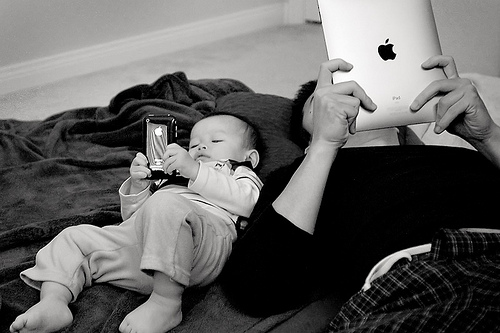
It’s a recurring theme in our family life. The tapping of keys at the keyboard, the alluring glow of a DSi, mobile phone or iPod Touch, eyes glazed over oblivious to the conversation nearby.

Sound familiar? In just one generation we’ve gone from radio and four channels on TV to a whole Pandora’s box of continual media, demanding our attention or distracting us from other pursuits.

If you’ve been struggling to maintain some kind of balance of media consumption in your home, or have become frustrated over attempts to restrict what your children view, you are not alone. But where do you even start?

While most parents don’t think twice about exerting some influence over their child’s appearance (at least pre-teen), meals or behaviour, many are bewildered when it comes to setting limits on media.

There is no easy answer; each family needs to navigate through this issue depending on the age and maturity of their kids, but there are some practical ways to curb the time and influence that the media exerts over our children, as well as us.

Be aware

Firstly, be aware of how media is consumed both in and out of your home. Stay informed about  your child’s internet use and avoid TVs, computers and consoles in bedrooms (even amidst complaints that everyone has these things in their room). Make yourself familiar with the gadgets they own and what they are used for.

Set limits

When our [then] seven year old son received a new DSi for his birthday, we had already agreed that it should not be used before school, nor till after homework has been completed. Agree the limits in advance with your child, otherwise you may well find your offspring permanently attached to their gadget every waking hour.

Discuss

Discuss the concerns you have and the reasons for them. Encourage open conversation about what your child has seen or heard, trying as best you can to not appear too alarmed by what they may share with you! Discuss issues of cyberbullying and personal safety. Have a look at websites such as thinkuknow to get better informed.

Rules

There’s nothing wrong with establishing a few rules when it comes to managing the media in your house; like only having censored versions of CDs or mp3 tracks, rather than the expletive ridden originals from artists such as Tinie Tempah or Plan B. Likewise feel free to  insist on adhering closely to the age restrictions on DVDs and video games.

One rule we’ve adopted is ‘“No phones’ at the meal table. Texting is only allowed once others have left the table. This allows for uninterrupted conversation as well as the learning of some manners. (And, yes, this rule does get broken now and again, but at least phones aren’t a regular mealtime feature.)

Use technology to help you

Find out about and use parental software controls, passwords on computers and TV (Google it!) Explain to your child that you will be monitoring their TV and internet use and that certain sites are off limits (I highly recommend Open DNS for a free internet filtering service that protects every computer in the house. There are variable options and restrictions. Check it out here.)

Be a good role model

Look at your own media habits. Are you always glaring at your laptop or hooked to your smartphone? Chances are that your child will copy you. Show restraint, for example, by not spending hours on the internet every night and try restricting social media to certain times of day.

You’ve got the power

Lastly, do not forget that you are the parent with the power to unplug or remove a gadget from your child, particularly if signs of addiction are evident. (Refusing to eat or get dressed is a sure-fire indication, but there are others.)

The benefits

In setting up some limits and restrictions, there will be more opportunities available to take back family time together. Often we’ve lost the art of relaxing without a screen or gadget; but this can be good for health, well being and relationships. Why not play a board game or go for a walk together? Or be more creative by painting, learning an instrument or a new hobby.

When the possibility of further electronic items is removed, kids generally find they actually enjoy themselves (after their initial moan). In our family we’ve noticed that we become more thoughtful of one another, a sense of humour restored and brighter faces return from time spent outdoors.  We’re still far from having everything sussed in this area, but we’re trying to have some measure of control over our media habits, rather than allow technology and the media to control us.

This article was first published in 2012 by Lookingatlife, a former webzine of Care for the Family. Written by Annie Carter

A Cluttered Mind…

Image

As I looked back on the day, I realised that I had barely had the chance to gather my thoughts and was shocked at how unproductive I had been. It wasn’t a question of time – I certainly had moments throughout the day where I could have focussed on writing. But that was the problem – I couldn’t focus. Demands, distractions and concerns consumed me, and I realised my mind was out of sorts – cluttered.  I wouldn’t be able to concentrate on anything else. It became obvious that:

A cluttered mind…

  • stifles creativity
  • confuses thought
  • thwarts plans
  • delays action
  • minimises success

A cluttered mind may also overwhelm or depress you.

How to de-clutter and refresh your mind?

  • unplug technology
  • walk among nature
  • listen carefully
  • breathe in beauty

Music may also provide a positive backdrop to encourage clarity.

Once in a while we could all benefit from calm and walking away from the chaos.

A quote from the Bible: “But you should keep a clear mind in every situation.” (2 Timothy 4:5, New Living Translation)

Boston, Prayer and Tragedies / FaithWalk Response

Creative Commons: 4ThGlryOfGod

I wonder how many of us were praying for Boston before the Marathon or the explosions.

It’s not my intention to be facetious; I’m just considering some issues swirling around my head right now. It seems close to home, yet still far away. The hashtag #prayforBoston sprang up quickly across Twitter, as people of faith responded in the best way they could. When you’re too far away to give blood or offer help at the scene, prayer is the one thing unrestricted by distance.

As events unfolded on Monday, I began thinking about how much of our praying is reactionary, a knee jerk response to crises & collisions in our lives and spaces or the lives of others.

That’s not to say that we shouldn’t pray after tragedies & events in the news. We should. We should always seek out opportunities to pray for those going through disaster or pain.

But maybe there’s something we can all learn from that prayer we are so familiar with – the Lord’s prayer, where Jesus instructs us to pray – Deliver us from evil… Your kingdom come.

It should be a daily practice in our spiritual walk to pray in the way Christ demonstrated to us.

Maybe we should return to the roots of our faith and revive corporate prayer… Deliver us! It’s not just an Anglican, liturgical thing; Jesus wants all believers to pray in this way.

Are we willing to get on our knees and pray for our towns and cities to be shielded from devastating violence?

I’m aware of the tendency in my own life to coast along in my prayer activity when everything’s going just nicely. When an urgent situation or major dilemma arises, I immediately think about praying fervently. It’s my natural response.

I need God when I’m in trouble. There is no shame in that. Even the psalmist illustrates how we can walk through the valley of the shadow of death. I am weak and know I need God in my moments of desperation, in times of dismay.

But what about praying with passion when nothing special is going on, when mainly good stuff is occurring in life and in my vicinity?

The Boston bombings have challenged me once again to pray urgently and wholeheartedly for my family, friends, city and country before they run into disarray. Before tragedy strikes. Before unspeakable horrors occur. I need to be reminded of this regularly.

In our towns, our cities and on our doorsteps live and lurk the desperate, the deluded and the dangerous people of our broken world.

We don’t know what thoughts consume or trouble those whom we walk past or interact with as we go about our daily life. The sad news of the distressed pregnant mother who killed herself and three children in Lowestoft struck a nerve as they lived in a street that I have walked along; it’s just a stone’s throw from a beautiful beach and I have relatives in that locality.

We shouldn’t live in paranoia, mistrust and constant fear. But we can pray – as Jesus taught us.

Your Kingdom come.

God’s kingdom come!  In our homes, on the streets, in our places of work and leisure.

Our praying will not necessarily avert destruction wreaked by those whose hearts are closed to Him. Disaster cannot be eliminated this side of eternity. But we can rest assured that we are fulfilling Christ’s commands by praying according to his will. We should not ever give up praying: “Your Kingdom come”. For where His kingdom is manifest – through love, compassion and grace – lives are transformed and nations are saved.

Let’s make it a constant thing in our Christian walk – to cling daily to the power of prayer. And at this time, as we pray for those affected by Boston’s horrific tragedy, let’s also offer prayers for the people and places near to us.

Also, be cheered by stories such as these to lift your spirits…

Amid shock at Marathon, a rush to help strangers http://b.globe.com/13ce8Xe

Museums offer free admission in response to marathon bombings http://b.globe.com/YtdgKF

Poem for Boston: Marathon Monday


Expectancy in the crowds
Runners push themselves to the limit
Breathless and bubbling with pride
Destined for glory
Racing towards the finish line

Eyes focus on the final stretch
A race against time
Passion compels to keep going
Even under the strain

Oh the pleasure of a momentous day! When –

Loud blasts dismay, flames invade
The unthinkable shatters
Dreams strewn in the gutter
Anticipation smashed by shock
Coursing through veins like a smack in the face
Into a heart of absolute terror

No cheers or jubilation
Explosions steal the day
Fear overtakes and crying commences
Chaos tears through, taking centre stage

Blood on the streets
Carnage surrounds
Fear etched on their faces
Destruction blasts the joy away
People panic and fall on this

Horror filled Marathon Monday

It was never meant to be this way
Why did this have to happen today?
Goals and dreams smashed in pieces
Despair and dread assume their places

Anything can spoil a day
But they never thought it would end this way

Pain inflicted on purpose
A hellish scene to behold
Utter disbelief, complete shock
How can someone choose to act this way?
A moment of madness brings
Devastation

On this April Marathon Monday

But there is hope in humanity as
Arms reach out and legs run into
The commotion
Caring hands help heal the wounded
Swift to repair, to hold, to revive
Nothing can impede the human spirit
Forged by God himself, made in His image

Love will overcome
And Boston will rise
To live another day
But may never be quite the same

Oh the heartache of a single day

May freedom ring out once more on Patriots’ Day